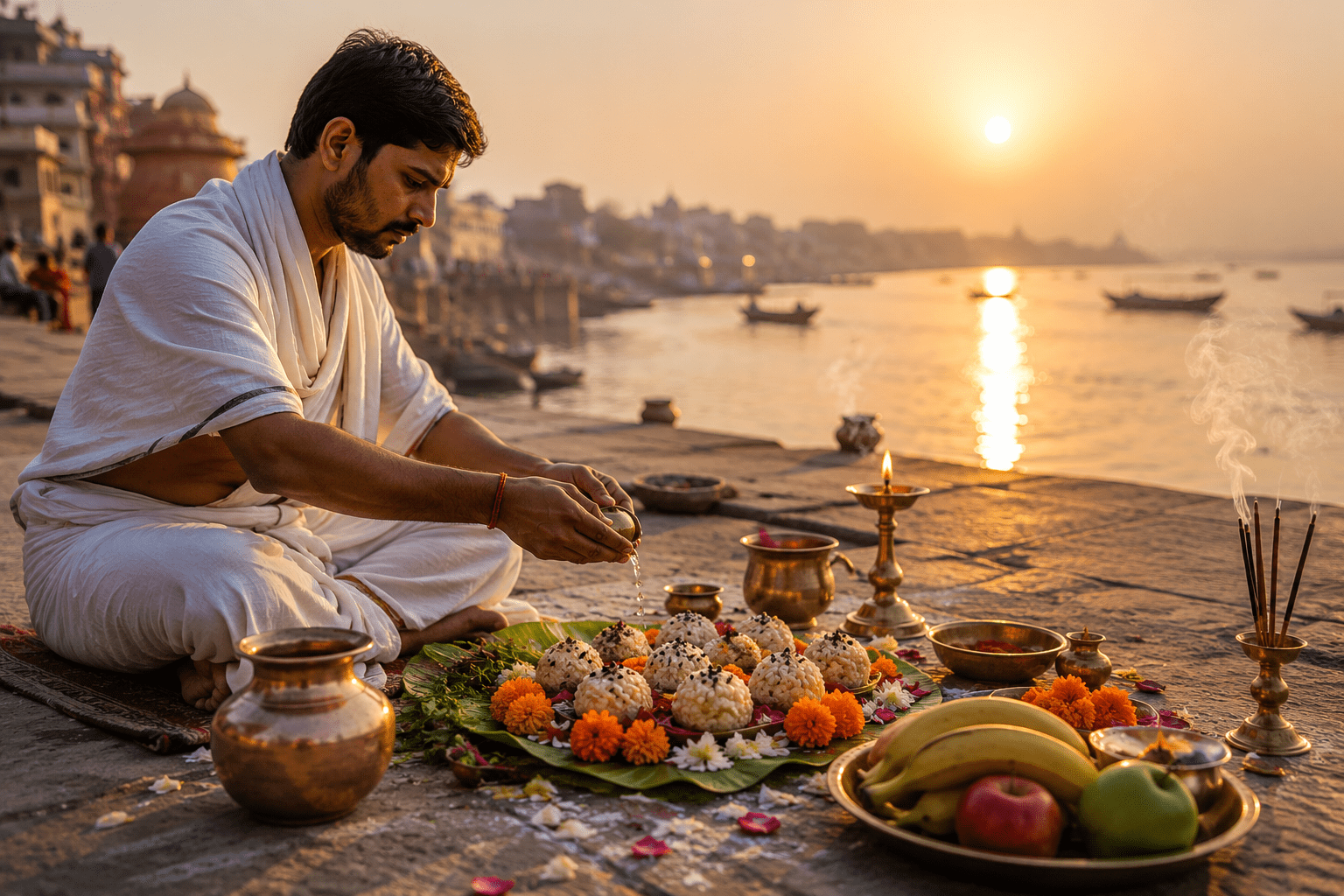

If you’re visiting Varanasi for the first time, the Ganga Aarti is almost certainly on your list — and it should be. But knowing what to actually expect, where to go, and how to plan your evening makes a real difference between a rushed, confusing experience and one you’ll genuinely remember. This guide covers everything a first-time visitor needs to know before watching the Ganga Aarti in Varanasi.
What Is the Ganga Aarti?
The Ganga Aarti is a traditional Hindu worship ceremony dedicated to the river Ganges, personified as Mother Ganga. Every evening, priests gather at the ghats to perform a synchronized ritual using large brass lamps, incense, conch shells, and devotional chanting. It’s simultaneously a religious ceremony and one of the most visually striking events a visitor to India can witness — a blend of tradition, sound, and light performed the same way it has been for generations.
Where Does the Main Ceremony Take Place?
The most well-known and elaborate version of the Ganga Aarti happens at Dashashwamedh Ghat, Varanasi’s central and most prominent ghat. Multiple priests perform the ritual simultaneously here, making it the largest and most visually impressive version of the ceremony in the city. Other ghats, like Assi Ghat, host their own smaller versions with a quieter, more intimate atmosphere.
For a first-time visitor wanting the complete, iconic experience, Dashashwamedh Ghat is where you’ll want to be.
What Time Does the Ganga Aarti Start?
The ceremony is timed around sunset, so the exact start time shifts across the year:
| Period | Approximate Start Time |
|---|---|
| April – September | Around 6:45 PM |
| October – March | Around 5:45–6:00 PM |
| Duration | Roughly 45 minutes |
Since timing can shift slightly depending on the specific date, it’s worth confirming the day’s schedule rather than relying on a general rule alone.
How Early Should You Arrive?
For general, free viewing at the ghat, arriving 45 minutes to an hour early is a reasonable guideline — earlier on weekends, and considerably earlier during festivals or peak season (October to March). If you’ve booked VIP or reserved seating, you can typically arrive much closer to the start time, around 20–30 minutes ahead, since your spot is already secured.
What to Expect When You Get There
The area around Dashashwamedh Ghat becomes progressively busier as evening approaches — vendors, boats gathering on the river, and a growing crowd of locals, pilgrims, and fellow travelers. As the ceremony begins, the priests move through a series of coordinated steps: lighting the lamps, waving them in rhythmic patterns, ringing bells, and chanting, all building toward a striking, layered display of sound and movement.
For a first-timer, it can feel overwhelming in a good way — genuinely different from a typical tourist attraction, since it’s a real, ongoing religious practice rather than a performance staged for visitors.
How to Watch: Your Viewing Options
General ghat viewing is free and open to anyone, on a first-come basis. It requires arriving early and finding your own spot among the crowd, with a view that can range from decent to fairly distant depending on how early you arrive.
Boat viewing offers a different perspective — watching from the river gives you the full illuminated ghat in view, which photographs beautifully, though the ritual’s finer details are harder to see from a distance.
VIP or reserved seating means a dedicated seat close to the main platform, arranged in advance, letting you skip the early arrival and see the ceremony’s details clearly without competing for space.
For first-time visitors, especially those with only one evening in Varanasi, VIP seating tends to remove the most uncertainty — you know exactly where you’re going and that you’ll have a clear view, rather than hoping the crowd works in your favor.
What to Wear and Bring
- Dress modestly — this is an active religious ceremony, not a tourist show
- Wear comfortable shoes, since you’ll likely be walking through narrow lanes to reach the ghat
- Keep valuables secure, as the crowded lanes leading to the ghats can get busy, particularly during peak season
- Bring small cash, since not everything nearby accepts cards
Common First-Timer Mistakes to Avoid
- Underestimating the crowd — Dashashwamedh Ghat gets genuinely packed, especially on weekends and during festivals
- Arriving too late for general viewing, and ending up far from a clear view
- Assuming the timing is fixed year-round — always check the day’s specific schedule, since it shifts with the season
- Not accounting for travel time through Varanasi’s narrow old-city lanes, which often takes longer than map estimates suggest
Is the Ganga Aarti Worth Watching?
For nearly every visitor, yes. It’s one of the few experiences in India that manages to be both a major tourist draw and a genuine, unaltered religious practice happening exactly as it would with or without visitors present. The atmosphere — the crowd, the chanting, the lamps reflecting on the Ganges — is difficult to replicate anywhere else in the country.
Planning Your Evening Around the Aarti
If you’re only in Varanasi for one evening, it’s worth building your schedule around the ceremony rather than treating it as an afterthought. Arrive with enough time to also take in the surrounding atmosphere at the ghats beforehand, and consider whether a boat ride before or after the Aarti fits your itinerary, since many visitors combine the two into a single, memorable evening.
Book Your VIP Ganga Aarti Darshan
If you’d rather skip the early arrival and crowd navigation, reserving a VIP seat in advance means your evening is settled before you even reach Varanasi — a clear view, a confirmed seat, and one less thing to plan on your trip.
Book VIP Ganga Aarti Darshan in Varanasi
Frequently Asked Questions
What time does the Ganga Aarti start in Varanasi? It follows sunset, generally around 6:45 PM from April to September, and around 5:45–6:00 PM from October to March.
Where is the best place to watch the Ganga Aarti? Dashashwamedh Ghat hosts the largest and most well-known version of the ceremony, making it the top choice for most first-time visitors.
Is the Ganga Aarti free to watch? Yes, general viewing from the public ghat area is free. VIP or reserved seating, and boat viewing, are available as paid options for a more comfortable experience.
How long does the Ganga Aarti last? The ceremony generally runs about 45 minutes, though timing can vary slightly by season and specific date.
Do I need to book in advance as a first-time visitor? It’s not required for general viewing, but booking VIP seating in advance is recommended if you want a guaranteed, close view without arriving hours early.