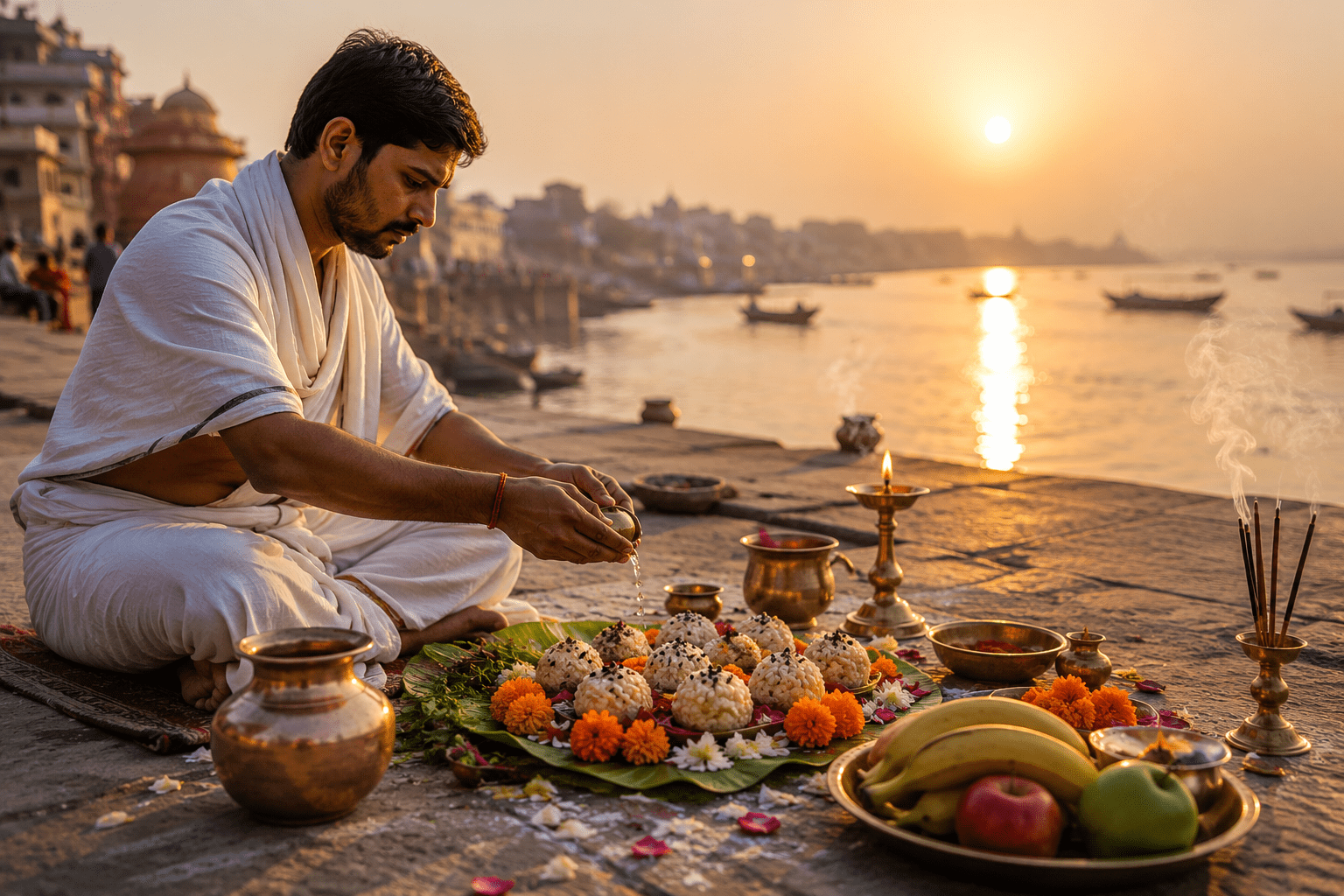

Varanasi has dozens of ghats lining the Ganges, but not all of them are used for Pitra Shradh Puja, and the ones that are carry different traditions and significance. Choosing the right ghat isn’t just a logistical detail — for many families, it’s part of ensuring the ritual is performed with proper tradition and meaning.
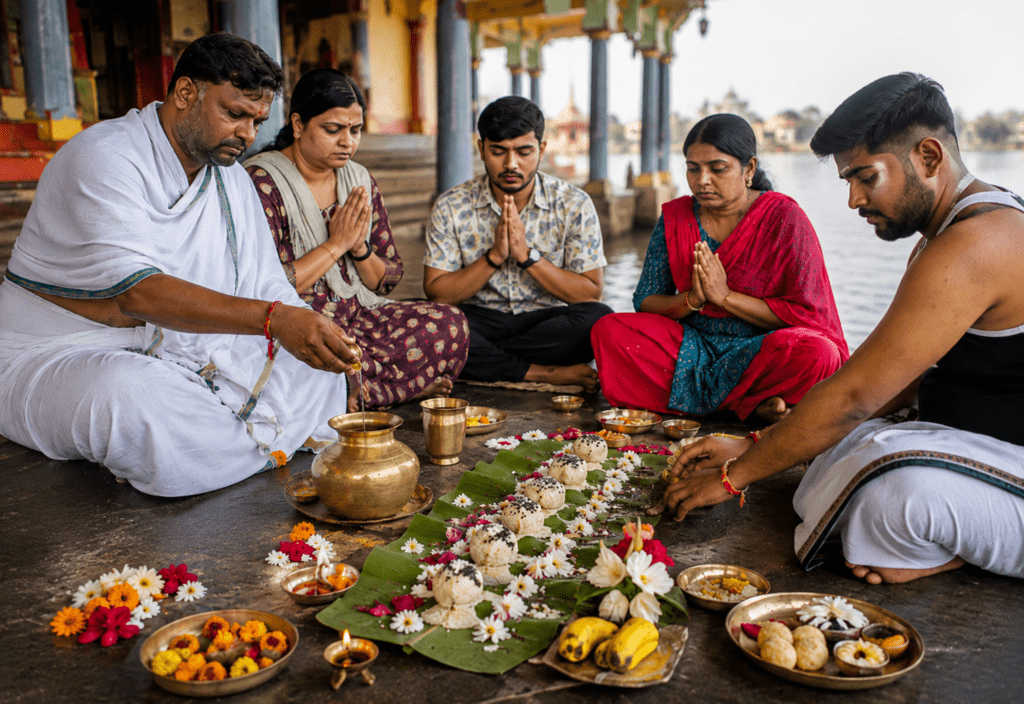
Why the Ghat Matters for Shradh Puja
Shradh rituals performed on the banks of the Ganges are considered especially significant in Hindu tradition, given the river’s sacred status and its association with purification and the passage of the soul. While the core ritual procedure remains consistent, the specific ghat can carry its own local significance, family tradition, or practical considerations that make one location more suitable than another for your family’s ceremony.
The Most Commonly Used Ghats for Shradh Puja
Manikarnika Ghat Widely regarded as one of the most sacred cremation and ritual sites in Varanasi, closely associated with death rites and the belief that souls cremated or honored here attain liberation. Many families specifically seek this ghat for Shradh ceremonies given its deep spiritual association with the cycle of death and rebirth.
Dashashwamedh Ghat Varanasi’s most central and well-known ghat, primarily associated with the evening Ganga Aarti, but also used by some families for Shradh rituals, particularly Tarpan, given its accessibility and prominence.
Assi Ghat Located at the southern end of Varanasi’s ghat stretch, Assi Ghat offers a somewhat quieter setting compared to the busier central ghats, making it a consideration for families who prefer a less crowded environment for their ceremony.
Kedar Ghat Associated with the nearby Kedareshwar Temple, this ghat carries its own devotional significance and is used by some families as part of a combined temple-and-river ritual visit.
How to Decide Which Ghat Fits Your Family
Consider family tradition first. If your family has performed Shradh at a specific ghat in the past — passed down through previous generations — continuing that tradition often takes priority over other considerations.
Think about crowd tolerance. Central ghats like Dashashwamedh can be considerably busier, particularly during Pitru Paksha, while quieter ghats offer a more contained, private setting for the ceremony.
Factor in accessibility. If elderly family members are attending, a ghat with easier access and fewer steps may be a practical consideration alongside spiritual significance.
Ask your pandit for guidance. Experienced Vedic pandits performing Shradh regularly in Varanasi often have insight into which ghats suit specific ritual combinations or family circumstances, and can offer guidance if you don’t have a strong existing preference.
Does the Ghat Affect the Ritual’s Validity?
The core Vedic procedure for Shradh — Sankalp, Tarpan, Pind Daan, and the remaining sequence — is performed the same way regardless of which specific ghat you choose, since the sanctity comes primarily from the Ganges itself rather than one particular stretch of riverbank. That said, specific ghats carry additional layers of significance in local tradition, which is why many families still have a genuine preference.
What to Expect at Your Chosen Ghat
Whichever ghat you select, expect a designated, organized space for the ceremony, coordinated by your pandit, away from the general crowd where possible. Your pandit will guide the ritual sequence, and the setting — the sound of the river, the surrounding ghats, and the broader atmosphere of Varanasi — becomes part of the experience itself for many families.
Booking Your Ghat Along With Your Puja
When you book your Pitra Shradh Puja, discuss your ghat preference — or ask for guidance if you don’t have one — as part of the booking process, so this detail is confirmed alongside your date and ritual package rather than left to be decided on arrival.
Book Your Pitra Shradh Puja at the Right Ghat
Whether you have a specific ghat in mind based on family tradition, or you’d like guidance choosing one, confirming this detail as part of your booking ensures your family’s ceremony takes place exactly where it should.
Book Pitra Shradh Puja in Varanasi
Frequently Asked Questions
Does the specific ghat affect whether the ritual is properly performed?
No, the core Vedic procedure remains the same regardless of ghat, since the Ganges itself carries the primary spiritual significance — though specific ghats hold additional local tradition for some families.
Which ghat is most commonly used for Shradh Puja in Varanasi?
Manikarnika Ghat is widely associated with death rituals and Shradh ceremonies, though Dashashwamedh, Assi, and Kedar Ghat are also used depending on family preference and tradition.
Can I request a specific ghat when booking my puja?
Yes, discuss your ghat preference as part of your booking, or ask your pandit for guidance if you don’t have a specific one in mind.
Is a quieter ghat better for elderly family members attending?
Generally yes — quieter ghats with easier access can be more practical for elderly attendees compared to busier, more crowded central ghats.
Should I follow family tradition when choosing a ghat, or does it matter less than I think?
If your family has an established tradition regarding which ghat to use, continuing that is generally recommended, though the ritual’s validity doesn’t depend on this choice.